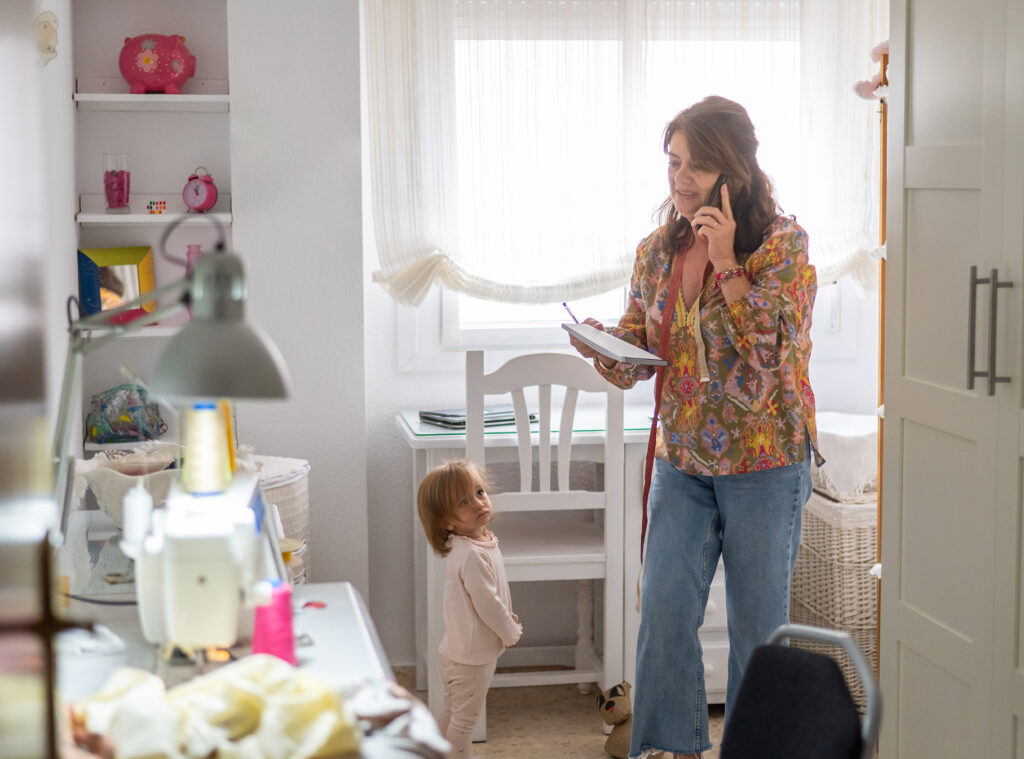
Unpaid domestic work refers to the activities necessary for the day-to-day functioning of households that are performed without financial compensation. These include tasks such as cleaning, cooking, shopping, and household organization, and are carried out predominantly by women. Unpaid care work, in contrast, involves meeting the physical, emotional, and cognitive needs of children, older persons, people with disabilities, and other individuals who require support, also without remuneration. In practice, these two forms of labour are deeply interconnected and together constitute an essential foundation for the sustainability of social and economic life.
Ücretsiz bakım emeği ise çocukların, yaşlıların, engelli bireylerin ya da bakıma ihtiyaç duyan yetişkinlerin fiziksel, duygusal ve zihinsel ihtiyaçlarını karşılamak için yine ücret karşılığı olmadan yürütülen emeği tanımlar.
Bu iki emek biçimi çoğu zaman iç içe geçer ve toplumsal yaşamın sürdürülebilirliğinin temelini oluşturur.
CURRENT STATISTICS
3x
MORE TIME
Women spend three times more time on unpaid domestic and care work than men, contributing significantly to cycles of time poverty.
606
MILLION OUT OF THE LABOUR FORCE
Globally, approximately 606 million women are unable to participate in paid employment due to unpaid care responsibilities. For men, the figure is only 41 million.
10.8
TRILLION DOLLARS
The estimated annual economic value of women’s unpaid care work worldwide is US$10.8 trillion—roughly three times the value of the global technology sector.
CURRENT CARE POLICIES
Care Policy Recommendations Tool
At İhtimam, we curate emerging care policy recommendations and translate them into practical guidance for different stakeholders. Select a stakeholder group and thematic area to explore relevant policy recommendations, strategies, and actions from Türkiye and around the world.
The Care Radar tracks emerging developments, weak signals, and evolving conversations across the care landscape. It is designed to help us understand how care is changing and to explore these shifts through an ethical and systems-oriented lens.
Time Poverty Is Deepening
Unpaid domestic and care work continues to create chronic time poverty, particularly for women. People are losing not only income opportunities but also time itself. Everyday life is increasingly organized around a constant sense of not being able to keep up. What was once framed as individual stress is now being recognized as a structural form of inequality.
The Rise of Mental Load as a Public Issue
There is growing recognition that domestic labour consists of far more than physical tasks. Planning, remembering, coordinating, anticipating needs, and managing emotions are increasingly discussed under the concept of mental load. While the term has entered public discourse, social protection systems and policy frameworks still largely fail to recognize this labour.
Challenging the “Natural Duty” Narrative
Long-standing assumptions such as “mothers naturally care” or “daughters take responsibility” are increasingly being questioned. Unpaid care work is no longer explained solely through the language of love and sacrifice, but is increasingly understood as an economic and political issue. This discursive shift remains at an early stage, but it marks an important transformation.
Debates on Including Household Labour in GDP
The exclusion of unpaid domestic and care work from national income accounting is attracting growing criticism. Alternative measurement frameworks and satellite accounts are increasingly being discussed. The invisibility of such a vast economic contribution is becoming harder to justify.
The Fading Memory of the Pandemic
The COVID-19 pandemic briefly made unpaid domestic and care work highly visible. Yet as the immediate crisis subsided, much of this visibility faded. This suggests that care remains treated as infrastructure that is acknowledged only when systems come under strain.
The Digitalization of Care and the Redistribution of Burdens
Calendars, school applications, health portals, and messaging platforms have transformed many aspects of household coordination into digital tasks. However, responsibility for monitoring and managing these systems continues to fall largely on unpaid caregivers. The labour has not diminished; it has simply changed form.
Care Chains Across Households and Borders
Domestic and care work is increasingly redistributed across countries and social classes. While middle- and upper-income households may outsource care to migrant workers, many of these workers leave their own children or older relatives in the care of other women. Global care chains reveal how unpaid and underpaid care labour is reproduced through broader patterns of international inequality.
Emerging Care Credits and Pension Reforms
Some countries are experimenting with pension credits and social protection measures for people who leave the labour market due to caregiving responsibilities. Although still limited, these initiatives represent early efforts to acknowledge the economic value of unpaid care work.
The Institutionalization of Exhaustion
Chronic fatigue and burnout are becoming increasingly common among unpaid caregivers. Yet because caregivers are rarely recognized as a distinct group within health and welfare systems, many remain excluded from support mechanisms. This emerging care-related health crisis is only beginning to receive broader attention.
The Politicization of Care
Unpaid domestic and care work is increasingly moving beyond the realm of private family life and into debates on democracy, economic policy, and social justice. Concepts such as care infrastructure and care economy are gaining prominence, signaling a broader shift in how societies understand care and its role in sustaining collective wellbeing.