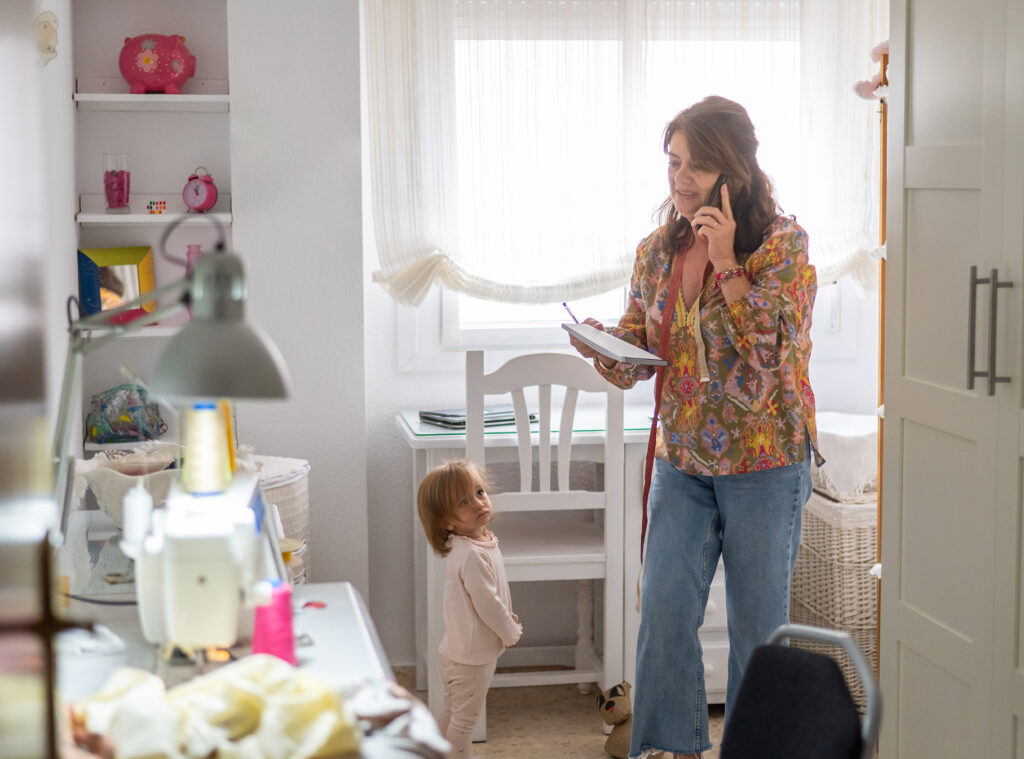
Invisible labour refers to the forms of work that are essential to sustaining everyday life yet often go unrecognized, unmeasured, and undervalued. It includes not only physical tasks, but also the mental work of planning, remembering, and organizing, as well as the emotional labour involved in maintaining relationships and supporting others. Most often carried by women, invisible labour enables households, workplaces, and communities to function, while remaining largely absent from economic measures, public policy, and decision-making processes.
CURRENT STATISTICS
10.8
TRILLION DOLLARS
The estimated annual economic value of women’s unpaid care work worldwide. This figure is roughly three times the value of the global technology sector.
x3
MORE TIME
Globally, women spend three times more time on unpaid labour than men. This imbalance directly reduces opportunities for career advancement, leisure, and rest.
%40
INCREASE IN MENTAL LOAD
During periods of crisis, such as pandemics or economic instability, the organizational and mental load within households can increase by up to 40%. Most of this additional responsibility is carried by primary caregivers, who are often women.
CURRENT CARE POLICIES
Care Policy Recommendations Tool
At İhtimam, we curate emerging care policy recommendations and translate them into practical guidance for different stakeholders. Select a stakeholder group and thematic area to explore relevant policy recommendations, strategies, and actions from Türkiye and around the world.
The Care Radar tracks emerging developments, weak signals, and evolving conversations across the care landscape. It is designed to help us understand how care is changing and to explore these shifts through an ethical and systems-oriented lens.
Conceptualizing Mental Load
Household planning, remembering, and organizing were long regarded as “natural responsibilities.” In recent years, however, these activities have increasingly been discussed under the concept of mental load. While not yet recognized as a distinct category in official statistics, the concept has gained growing visibility in both academic research and public debate.
The Measurement Gap of Organizational Labour
Time-use surveys capture household work and caregiving activities, but they often fail to account for planning, remembering, crisis management, and the continuous mental monitoring required to keep daily life functioning. As a result, a significant portion of household labour remains statistically underrepresented. Unless measurement frameworks expand, organizational labour will continue to remain invisible.
The Rise of Digital Coordination Platforms
Digital platforms designed for care scheduling, task sharing, and coordinating multiple caregiving responsibilities are becoming increasingly common. While these tools promise to reduce organizational burdens, in practice they often shift care work into digital spaces rather than reducing it. Nevertheless, they have the potential to make coordination work more visible as a form of labour.
Growing Responsibility for Digital Coordination
School applications, healthcare systems, and messaging platforms have digitized many aspects of caregiving. Rather than reducing workload, these systems can increase the burden of coordination, monitoring, and follow-up. Although this labour is not yet recognized as a distinct statistical category, it is receiving growing attention in field research and policy discussions.
Debates on Invisible Time in Platform Work
Research on digital platform work has increasingly highlighted the unpaid yet necessary tasks workers perform outside their formal assignments, such as interpreting instructions, filing appeals, and communicating with automated systems. These discussions challenge narrow definitions of work and offer indirect insights into the broader invisibility of organizational labour in caregiving contexts.
Recognizing Non-Code Labour in Open Production Communities
In open-source and collaborative production communities, activities such as mentoring, moderation, community support, and documentation are increasingly acknowledged as essential contributions. These forms of labour remained largely invisible for many years but are now being studied as distinct forms of work. Despite this recognition, compensation models remain limited.
The Digitalization of Care and the Redistribution of Burdens
Calendars, school platforms, healthcare portals, and messaging groups have transformed household coordination into a digital activity. Yet the responsibility for monitoring and managing these systems continues to fall disproportionately on unpaid caregivers. The labour has not disappeared; it has simply changed form.
Caregiver Burnout Enters Health Research
Research documenting the physical and psychological strain experienced by long-term caregivers continues to grow. Caregiver burden is increasingly recognized not only as a moral or social issue, but also as a significant public health concern. However, support systems for caregivers remain limited in many contexts.
Emerging Care Navigation Models
Some institutions and local governments are experimenting with professional care navigation services that help individuals coordinate complex care arrangements. These initiatives aim to reduce the organizational burden carried by caregivers. While promising, such models remain relatively rare and have yet to become systemic.
Framing Care as Infrastructure
The growing tendency to describe care as infrastructure rather than simply a service reframes invisible organizational labour as an essential component of social systems. This shift in language has the potential to influence discussions around public investment, time allocation, institutional design, and policy priorities.