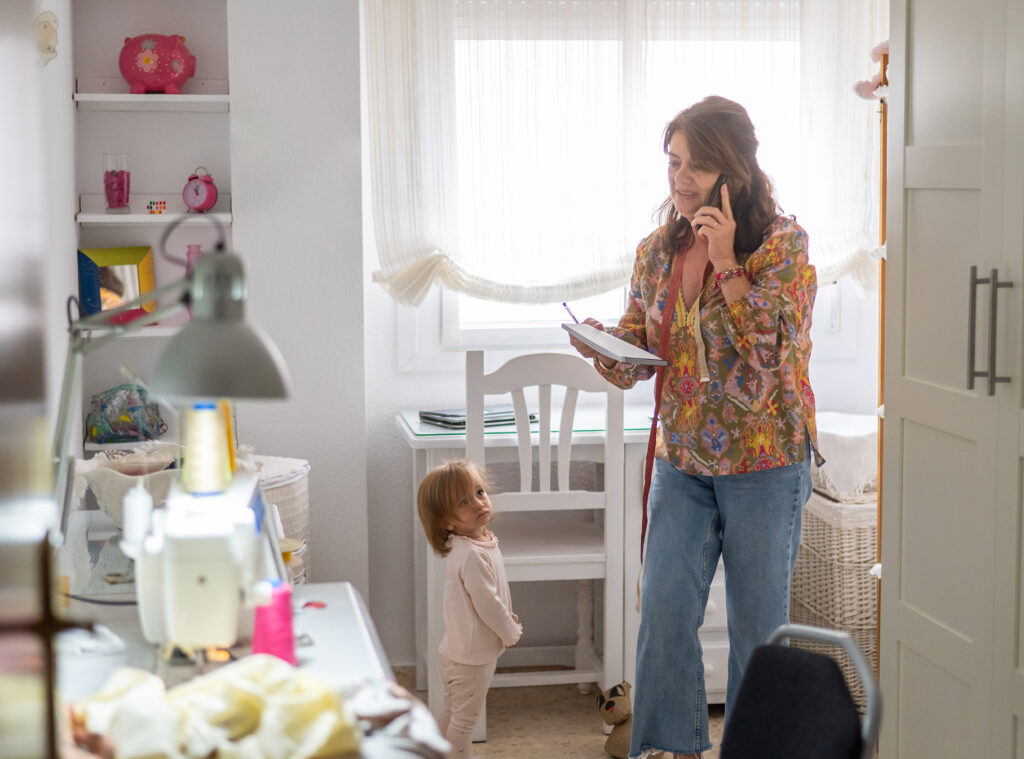
Women spend three times more time on unpaid domestic and care work than men, reinforcing cycles of time poverty and unequal access to economic and social opportunities.
10.8
TRILLION DOLLARS
The estimated annual economic value of women’s unpaid care work worldwide. This figure is roughly three times the value of the global technology sector.
75%
CARRIED BY WOMEN
Women perform more than 75% of unpaid care work globally, making them the primary providers of the labour that sustains households, communities, and economies.
CURRENT CARE POLICIES
Care Policy Recommendations Tool
At İhtimam, we curate emerging care policy recommendations and translate them into practical guidance for different stakeholders. Select a stakeholder group and thematic area to explore relevant policy recommendations, strategies, and actions from Türkiye and around the world.
The Care Radar tracks emerging developments, weak signals, and evolving conversations across the care landscape. It is designed to help us understand how care is changing and to explore these shifts through an ethical and systems-oriented lens.
The Persistence of Gendered Care Responsibilities
Time-use data continues to show that women perform the majority of unpaid care work. While men’s involvement in care is increasing, mental load, planning, and coordination responsibilities remain unevenly distributed. Inequality is changing form rather than disappearing.
The Rise of the “Involved Father”
The norm of the actively engaged father is becoming more visible, with more men participating in childcare. However, this shift remains uneven across class, cultural, and geographic contexts, limiting its transformative potential.
The Limits of Men’s Increasing Care Time
Research suggests that men are spending more time on childcare, yet much of the invisible work of anticipating needs, organizing schedules, and managing care responsibilities continues to fall to women.
The Celebration of Male Caregiving
When men provide care, they are often praised as exceptional or self-sacrificing. The same work is frequently treated as an expected responsibility for women, revealing how the social value of care is shaped by gender.
Cultural Barriers to Paternal Leave
Although parental leave policies have expanded in many countries, uptake among men often remains limited. Workplace cultures and expectations around masculinity continue to discourage equal participation in caregiving.
Men’s Growing Experience of Emotional Care
As more men engage in caregiving, they gain experience with empathy, emotional regulation, and relational responsibility. These experiences can challenge traditional masculinity norms and open space for new forms of care-centered identities.
The Concentration of Career Penalties on Women
Women continue to bear the greatest economic consequences of caregiving. Career interruptions, reduced working hours, and slower advancement remain disproportionately linked to women’s care responsibilities, reinforcing income and opportunity gaps.
Care and Unequal Democratic Participation
Heavy care responsibilities often limit women’s ability to participate in political, civic, and public life. The relationship between unequal care burdens and unequal representation is becoming increasingly visible.
Care and the Transformation of Masculinity
Caregiving can challenge dominant ideas of power, control, and independence associated with traditional masculinity. As more men engage in care, both resistance and new forms of masculine identity are emerging.