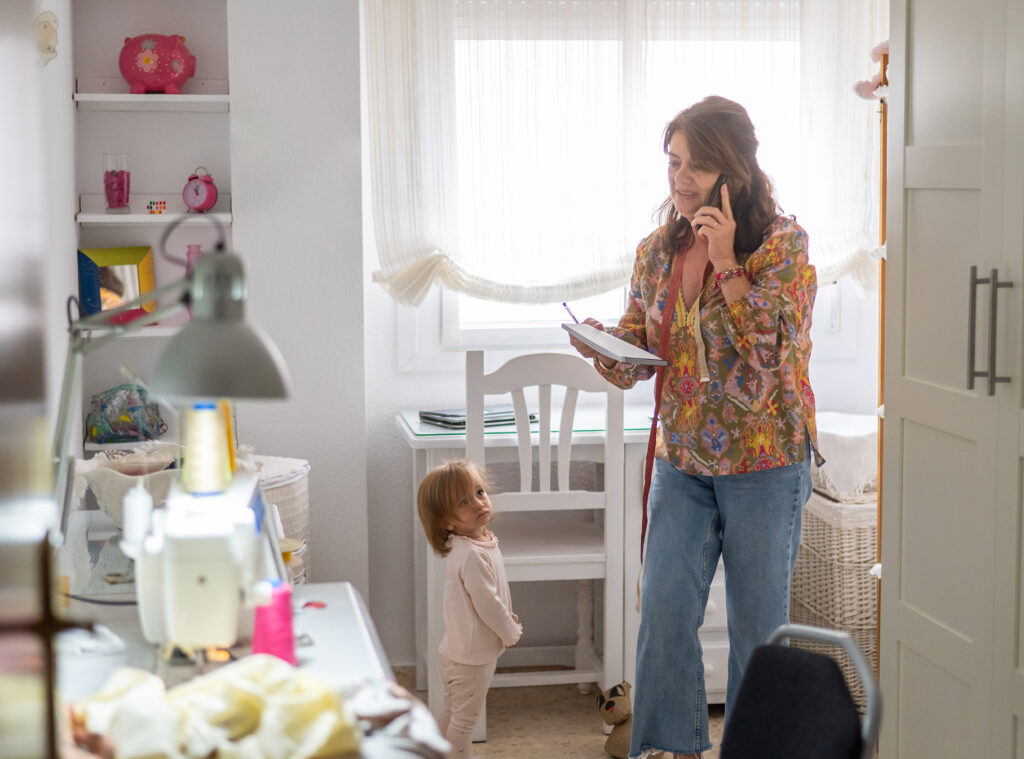
Paid domestic work refers to cleaning, cooking, childcare, eldercare, and other forms of household support provided in exchange for wages. Domestic workers play a vital role in sustaining households and meeting everyday care needs, yet their work often remains undervalued and insufficiently protected. The sector relies heavily on women’s labor and is frequently characterized by informal employment, low wages, and limited access to social protection and labor rights. While paid domestic work helps redistribute care responsibilities across households, it also reflects broader inequalities shaped by class, gender, migration, and access to resources. As such, domestic work is a critical component of both the care economy and labor policy.
CURRENT STATISTICS
75.6
MILLION
There are approximately 75.6 million domestic workers worldwide, providing essential household, care, and support services.
73%
ARE WOMEN
Around 73% of domestic workers are women, highlighting the highly gendered nature of paid domestic and care work.
81%
IN INFORMAL EMPLOYMENT
Approximately 81% of domestic workers work informally, often without social protection, legal safeguards, or access to employment benefits.
CURRENT CARE POLICIES
Care Policy Recommendations Tool
At İhtimam, we curate emerging care policy recommendations and translate them into practical guidance for different stakeholders. Select a stakeholder group and thematic area to explore relevant policy recommendations, strategies, and actions from Türkiye and around the world.
The Care Radar tracks emerging developments, weak signals, and evolving conversations across the care landscape. It is designed to help us understand how care is changing and to explore these shifts through an ethical and systems-oriented lens.
The Persistence of Informality
A significant share of domestic workers continue to work in informal arrangements, with limited access to social security, health insurance, and retirement benefits. Even where legal protections exist, enforcement often remains weak.
The Rise of Platform-Mediated Domestic Work
Cleaning and care services are increasingly organized through digital platforms. While these platforms can improve visibility and access to work, they also raise concerns about commissions, job insecurity, and worker protections.
The Growing Reliance on Migrant Domestic Workers
In many countries, domestic and care services depend heavily on migrant women’s labor. While this helps address care shortages, it can also reinforce existing class, gender, and racial inequalities.
The Blurring of Domestic Work and Care Work
Domestic workers are often expected to provide not only cleaning and household support but also childcare, eldercare, and assistance for people with care needs. Responsibilities frequently extend beyond formal job descriptions, while compensation does not always reflect this complexity.
Organizing Through Unions and Cooperatives
Domestic workers in some countries are increasingly organizing through unions, cooperatives, and worker associations. These initiatives seek to strengthen bargaining power, improve working conditions, and advance labor rights, though they remain unevenly distributed.
The Expansion of Short-Term and Part-Time Work
Hourly, temporary, and on-demand domestic work arrangements are becoming more common. While these models may offer flexibility for some workers, they can also reduce income stability and access to employment benefits.
The Growth of International Standards
International conventions and labor standards increasingly recognize the rights of domestic workers. However, implementation and enforcement vary widely across countries, leaving a persistent gap between legal recognition and everyday working conditions.