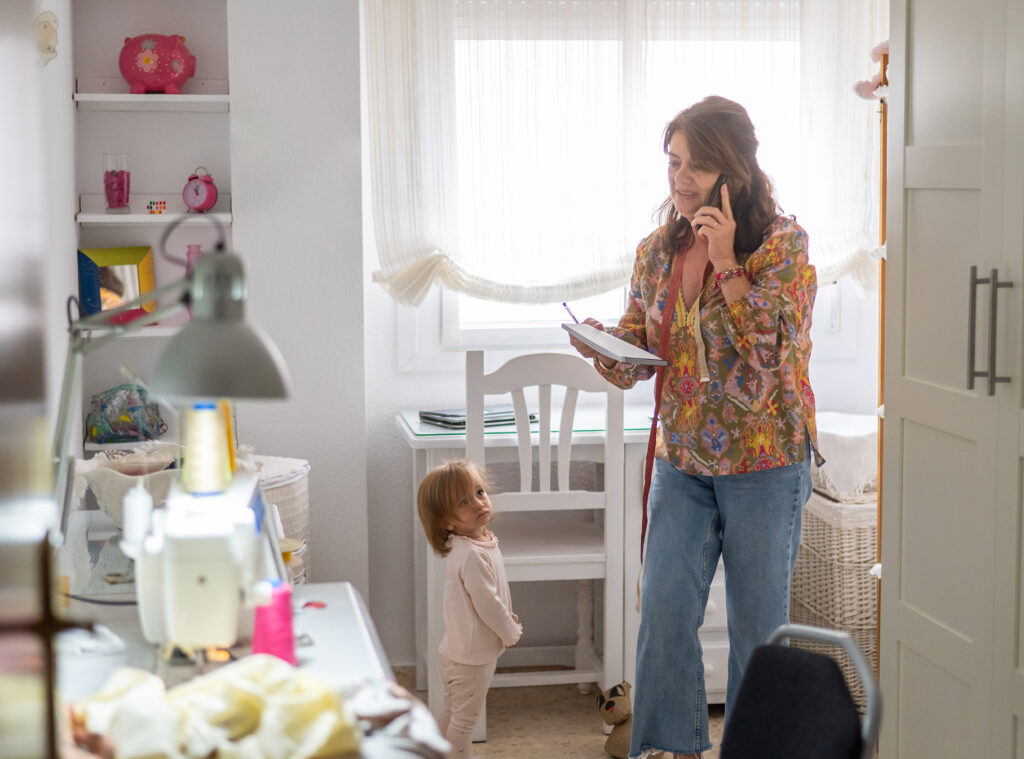
The care economy examines the economic dimensions of the activities that sustain and reproduce individuals, households, and societies. It encompasses unpaid domestic and care work, paid care services, social protection systems, and public investments that support caregiving and wellbeing. Investments in the care economy extend beyond care services themselves to include time-saving infrastructure, care-friendly workplace policies, comprehensive care leave provisions, and decent work conditions for care workers. By making visible the economic value of care, the care economy framework highlights that care is not merely a private concern but a foundational component of labour markets, social wellbeing, economic resilience, and sustainable development.
CURRENT STATISTICS
10.8
TRILLION DOLLAR
The annual economic value of women’s unpaid care work is estimated at $10.8 trillion worldwide—roughly three times the value of the global technology sector.
%9-15
GSYH Potansiyeli
If unpaid care work were included in national accounts, it would represent the equivalent of 9–15% of GDP in many countries, highlighting the substantial economic contribution of care.
606
MILLION WOMEN
Approximately 606 million women worldwide are unable to participate in paid employment because of unpaid care responsibilities. For men, the equivalent figure is around 41 million.
CURRENT CARE POLICIES
Care Policy Recommendations Tool
At İhtimam, we curate emerging care policy recommendations and translate them into practical guidance for different stakeholders. Select a stakeholder group and thematic area to explore relevant policy recommendations, strategies, and actions from Türkiye and around the world.
The Care Radar tracks emerging developments, weak signals, and evolving conversations across the care landscape. It is designed to help us understand how care is changing and to explore these shifts through an ethical and systems-oriented lens.
Reframing Care from a “Cost” to an “Investment”
International institutions are increasingly framing care spending not as a social burden, but as an investment in employment, productivity, and economic resilience. As a result, care economy debates are gaining greater prominence in macroeconomic discussions.
The Emergence of National Care Strategies
Some countries are introducing national care plans that address childcare, eldercare, and disability care within a single framework. Yet many of these strategies still rely on unpaid care work as an underlying assumption, limiting deeper structural transformation.
Workforce Shortages and Wage Pressures in Care
The care sector faces growing labor shortages. Low wages and the emotional demands of care work make many care jobs difficult to sustain, prompting renewed debates about the economic value of care.
The Growth of Care Cooperatives
Worker-owned care cooperatives are expanding as alternative models for delivering care services. Their aim is to improve both care quality and working conditions, though they remain a relatively niche but growing approach.
The Platformization of Care
Childcare, eldercare, and home-based care services are increasingly organized through digital platforms. While access may improve, concerns about precarity, fragmentation, and the marketization of care are also growing.
The Deepening of Global Care Chains
Care needs in high-income countries are increasingly met through migrant labor, particularly that of women. While this helps address care shortages in one context, it can create new care gaps elsewhere, making care an increasingly transnational economy.
Recognizing Care Beyond GDP
Time-use surveys and satellite accounting models are strengthening efforts to include unpaid care work in national economic accounts. Although measurement tools are advancing, their translation into policy remains limited.
Care Bonds and New Financing Mechanisms
Municipalities and public institutions are beginning to experiment with innovative financing tools to support care infrastructure such as childcare centers and eldercare facilities. Care is increasingly being framed as a form of social infrastructure investment.
Care-Centered Economic Debates
Within discussions on post-growth, resilience, and wellbeing economies, care is increasingly positioned at the center of economic thinking. Questions about the purpose of the economy are being revisited, with care emerging not merely as a sector, but as a broader paradigm for organizing society and economic life.